
Self Expression Photography: Finding Your Voice Through Self-Portraits
Sometimes, when I tell people that I’m a professional self-portrait photographer and teach others how to take self-portraits, they tell me that there must be a big gap in the market for that since “everyone loves taking selfies these days.”
They don’t realise that in my eyes, self-portraiture has nothing to do with selfies.
When taking a selfie, you want to show off your external features or capture a special moment with friends and family.
In contrast, self-portraiture is a deliberate act of self-expression that allows you to convey your thoughts and emotions.
In today’s post, I will talk about how to find your voice through self-portrait photography and how to create interesting images full of meaning.
Let’s get started!
(Just so you know: This post contains affiliate links. As an Amazon Associate/affiliate partner of other programmes, I earn from qualifying purchases).
I. The Concept of Finding Your Voice
First of all, let’s define what I actually mean by finding your voice:
In my opinion, finding your voice means discovering your unique perspective and style by communicating your thoughts, emotions and experiences in a way that resonates with others.
In a creative context, your voice is not just the content you create but also the unique way you present it—a mix of your personal experiences and emotions.
Ultimately, finding your voice is about developing a creative identity and using it to connect with others.
The Importance of Self-Expression
Next, why is it so important to express yourself creatively (in our case through self portraits)?
First of all, it can help you work through experiences or emotions.
For example, look at these two self portraits of mine which are both inspired by emotions I was going through at the time:
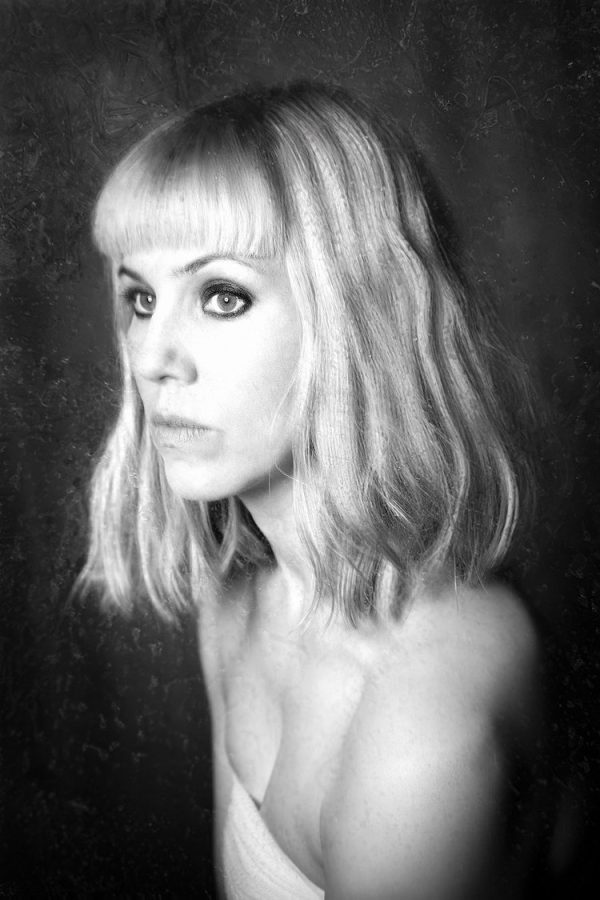
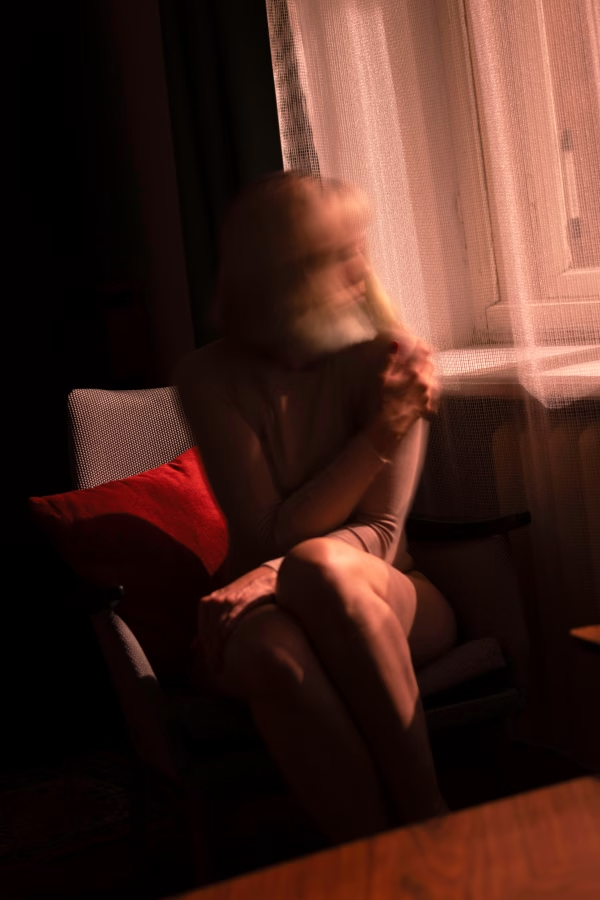
Creating a self-portrait can be a great tool to process things or to convey a message that’s important to you.
Second, I think we all should express ourselves creatively since everyone has such a unique point of view – if you created a self-portrait today, it would look completely different from the one I may create, simply because we are all individuals with different backgrounds, experiences and stylistic preferences.
That’s why I encourage everyone to express themselves—every point of view is valid, and nobody will have a voice or perspective like yours.
Why Photography Is A Great Tool for Self Expression
Of course, you can express yourself in many different ways – why choose self-portrait photography?
What makes photography so special is that images can convey emotions and tell stories in ways that words alone often can’t.
Additionally, photography is very accessible:
- compared to other art forms like painting or drawing, you don’t need comprehensive skills and can make your vision come to life relatively easily
- taking a picture only takes a second, so you can create a lot of work in a short timeframe
- you don’t need expensive art media, only a camera (even a mobile phone works)
Also, I love that you can manipulate and alter photographs in Photoshop or other editing software, giving you a lot of different creative possibilities.
II. Self-Discovery Through Self-Portraits
Okay, hopefully I’ve convinced you by now that expressing yourself through self portraits is a great idea!
Next, you may wonder WHAT exactly you should express through your images.
To get you started, it can help to view self portraits as a means of self-discovery.
This approach really is the antithesis of a “pretty selfie” – basically, you’re trying to capture your true self.
For example, you could express an emotion you’re feeling on a particular day; you could try and portray a character trait of yours in your self-portrait, or you could photograph yourself in real, unedited moments of your life the way a documentary photographer would.
Essentially, you want to use the camera to explore different facets of you.
When used in this way, self portraiture becomes a tool for reflection and introspection – the results are candid, perhaps even vulnerable images that show who you are.
This process can take a bit of courage because you may not be used to taking such honest pictures of yourself.
In regular photos, we always smile and try to look as pretty as possible.
However, in this kind of self-portrait, you want to express your inner thoughts and feelings through facial expressions, body language or make up – here’s an example of my own photographs:
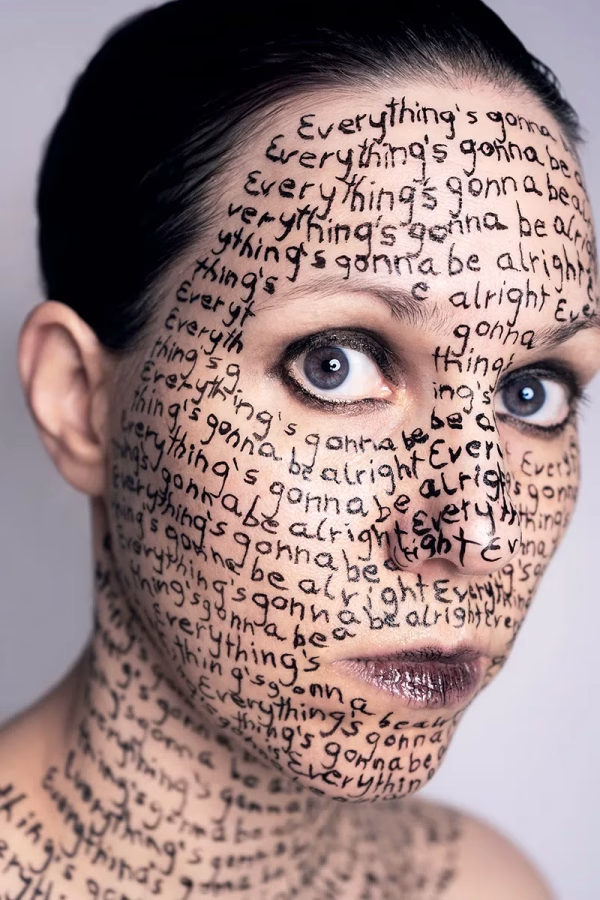
You can see that in this picture, I used an intense, direct look into the camera and make up on my face to portray my emotions.
This photo is definitely far away from a traditional “cute” selfie.
However, it has more meaning and depth and is thus a perfect example of self expression photography.
III. Technical Considerations
Let’s now talk about some technical considerations for your expressive self-portrait photographs.
First of all, if you need help with the basics of taking self portraits, like how to focus on yourself, how to set up your camera and how to take the photo remotely, read this post here which explains all of this in detail.
Next, here are some things to keep in mind when planning your self portrait shoot:
1) Lighting: Creating Mood and Atmosphere
Lighting is one of the most important aspects of photography because different lighting setups completely change the mood and atmosphere of the picture.
When it comes to self expression photography, try to be strategic about your lighting choices:
Before taking your self-portrait, consider whether you want even, flattering light without harsh shadows (like window light or light from a softbox), or more moody, reduced lighting (like the light emanating from a small bedside table lamp, some candles, etc).
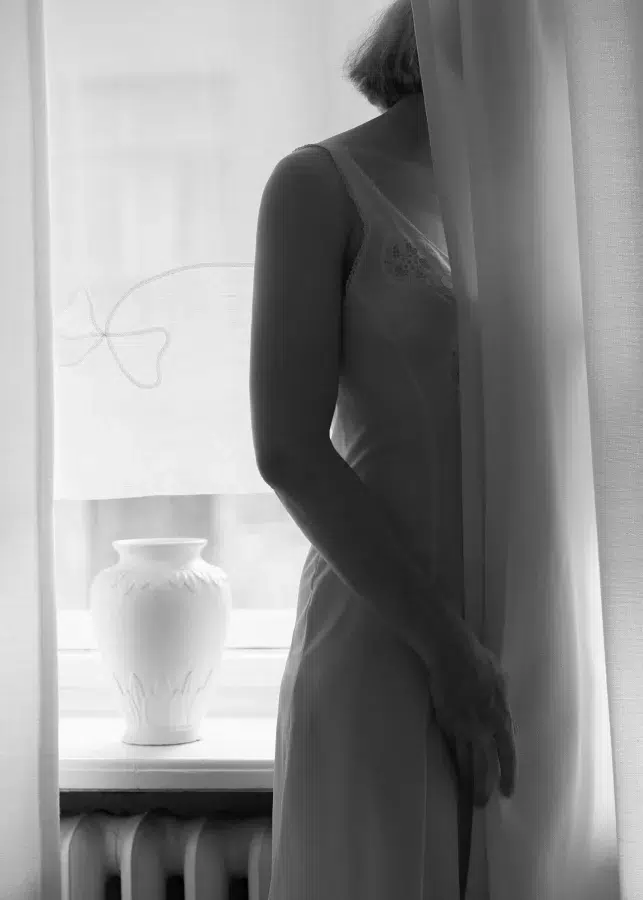
You can get amazing results using just window light or whichever light sources you have available at home.
However, if you are interested in learning more about artificial lighting for photography and perhaps want to invest in some professional lights, read this post here which will explain all the basics.
2) Choosing the Right Composition
A great composition can really elevate your self portraits, so make sure to give this some thought when planning your shoot.
Here are some composition tips to keep in mind:
Rule of thirds: The rule of thirds involves dividing the frame into a 3×3 grid and placing key elements, such as your eyes or face, along these lines or their intersections. This technique creates balance and draws the viewer’s eye naturally to the focal points of the image.
Leading lines: Use leading lines – natural or created lines within the frame that guide the viewer’s gaze towards you, like for example furniture, plants, tiles, etc.
Framing: Framing involves using elements within the environment to create a frame around you, which directs focus and adds depth. Try incorporating doorways, windows, or even your arms or hair.
Background: Be intentional about the backdrop for your self-portrait. A clutter-free or blurred background can help maintain the focus on your face; alternatively, an interesting background can add context or storytelling elements.
It’s definitely worth incorporating interesting wallpaper, tiles or other surfaces you may have in your home.
Perspective and angles: Changing the angle or perspective from which you shoot your self portrait can completely change the feel of it.
Shooting from above can make you appear smaller and more delicate, while shooting from below can add height and power.
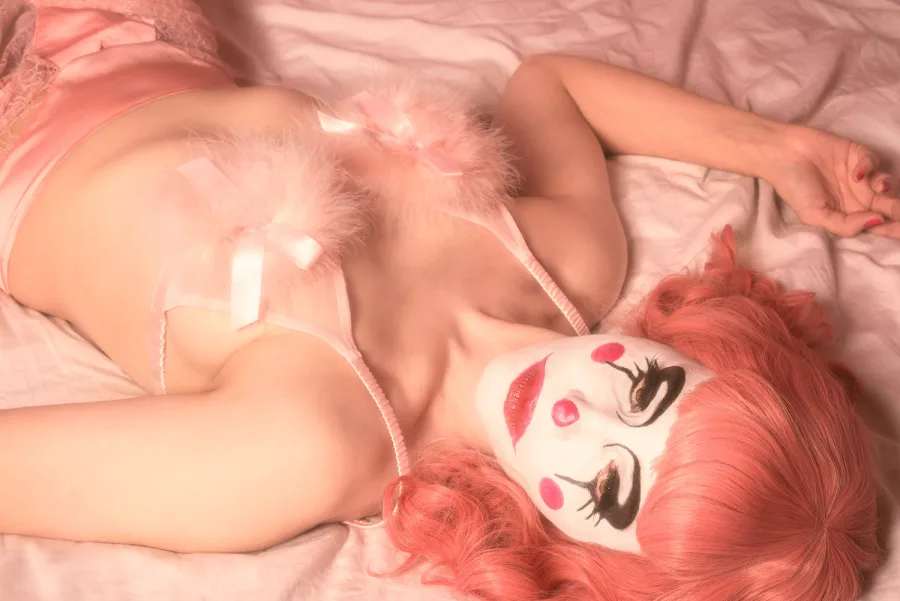
3) Expressing Yourself Through Posing and Body Language
Expression and posing are super important when it comes to conveying emotion and personality in your self-portrait.
Think about the mood you want to express and choose an expression and pose that aligns with it.
Always keep body language in mind – for example, somebody who is sad probably won’t sit upright, but will have a slumped posture with rounded shoulders.
In regards to posing, it can help to look at lots of photographs and paintings and keep a visual record of it – I like using Pinterest for this.
If you need more help with posing, have a look at this post about the topic.
I also recommend this book if you want to dive deeper into the topic.
IV. Creative Techniques
Next, let’s look at some creative techniques that will help you with self expression photography.
1) Use of Props and Environment
In self expression photography, props and environment can play a huge role in adding more meaning and depth to your images.
By using these elements, you can convey a narrative, evoke emotions, and express aspects of your personality or identity.
Props: Props can be powerful storytelling tools. They can symbolise your interests, hobbies or beliefs and communicate something about you, like a musical instrument or a book.
When choosing props, think about their symbolic meaning and how they relate to the story you want to tell. You can also use props to create an interesting composition or to add a colourful accent to your image.

Environment: The environment in which you photograph yourself influences the mood and message of your self-portrait.
For example, a natural setting like a forest or beach can convey a sense of tranquility or freedom, while an urban backdrop can make your pictures look more modern or dynamic.
2) Creative Use of Camera Settings
You can also use different camera settings as a tool for self expression photography.
Once you understand how to manipulate settings like aperture, shutter speed, ISO and focus, it will be easier to achieve your desired mood and aesthetic.
Aperture (f-stop): Aperture controls the depth of field, or the extent of the scene that is in sharp focus.
A wide aperture (small f-stop number, like f/1.8 or f/2.8) creates a shallow depth of field, blurring the background and making you/the subject stand out sharply.
This is ideal for emphasising your facial expression and isolating you from the background.
Conversely, a smaller aperture (higher f-stop number) will keep more of the scene in focus, which can be useful if you want to incorporate detailed surroundings into your self portrait.
Shutter speed: Shutter speed determines how motion is captured in your image.
A fast shutter speed (e.g. 1/1000s) freezes motion, which makes it perfect for capturing sharp, dynamic self-portraits.
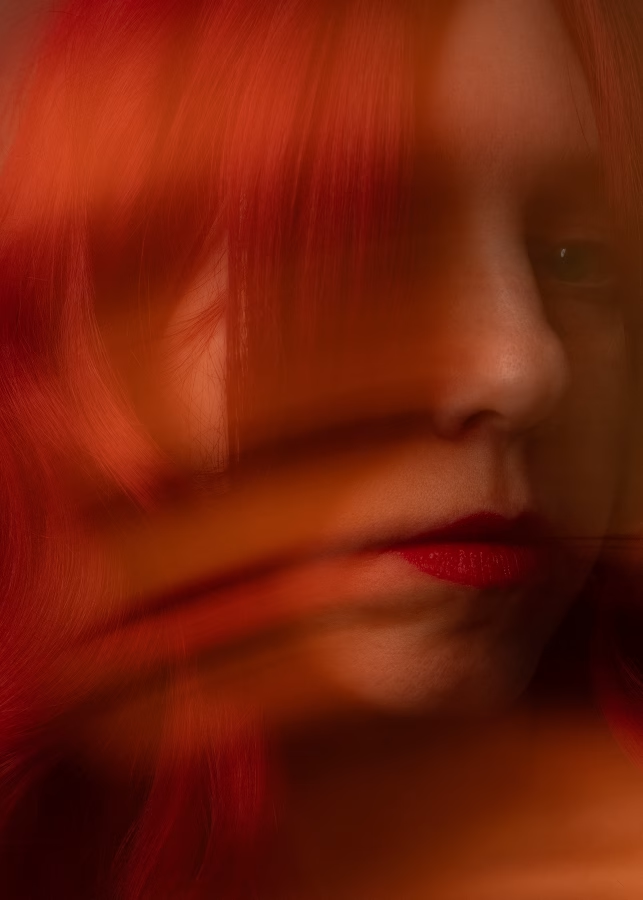
On the other hand, a slow shutter speed (e.g. 1/30s or slower) can be used to create motion blur.
This can add a sense of movement or a kind of ghostly look, especially when combined with intentional movements. Here’s an example:
ISO: ISO affects the camera’s sensitivity to light.
Lower ISO settings (e.g. 100 or 200) produce images with less noise and are ideal for well-lit environments.
Higher ISO settings (e.g. 800 or above) allow you to shoot in low light without a flash but can make the image look grainy (you can also use grain creatively to add a gritty, raw aesthetic, especially in black-and-white self portraits).
Focus and manual settings: Try using manual focus to draw attention to specific parts of the frame.
Selective focus can highlight a particular feature, like your eyes, leaving other elements out of focus.
3) Creative Post-Processing
The next way you can give your self portraits a more artistic touch is by using post-processing.
I personally use Photoshop, but you can do the following actions in most editing programmes.
Colour grading: One of the most impactful post-processing techniques is colour grading.
By adjusting the hues, saturation and colour balance, you can give your self-portrait a certain aesthetic or evoke specific emotions.
Warm tones, such as oranges and reds, create a feeling of warmth and intimacy, while cooler tones like blues and greens can convey calmness or melancholy.
You can also try adding different colours to the highlights and shadows for a more cinematic effect.
For a deep dive into colour grading, check out my previous post here.
Contrast and exposure adjustments: By adjusting contrast and exposure, you can completely change the mood of your self portrait.
Increase the contrast for a more dramatic, intense look, or lower the contrast for a more dreamlike quality.
Similarly, playing with exposure levels can help you achieve high-key images that are bright and airy, or low-key images that are darker and moodier.
Textures and overlays: I love adding textures or overlays in Photoshop to make the image more visually interesting.
For example, adding a subtle grain can give your self portrait a vintage feel, while applying light leaks or bokeh overlays can create a dreamy atmosphere.
Selective editing: Use selective editing tools to focus on particular parts of the image, such as enhancing your eyes or smoothing your skin while maintaining texture.
This allows you to direct attention to specific features and really make them stand out.
Artistic filters and effects: you can also experiment with artistic filters, such as black and white conversion, vignetting, or even painterly effects. These can help convey a specific mood and give your self-portrait a more artistic touch.
IV. Additional Resources
I hope you’ve found these tips and techniques for self expression photography and finding your creative voice helpful.
If you want to delve deeper in the topic, check out the following resources for self portrait photographers:
50 Self Portrait Photography Ideas E-Book
If you need some ideas for your self-portrait photography shoot, make sure to download my free e-book with 50 self-portrait photography ideas:
Free Ebook-50 Self Portrait Photography Ideas
Do you love self-portrait photography, but lack inspiration for your shoots? Then download my e-book with 50 ideas for self-portrait photography!

Other Self Portrait Photography Related Books
Here are some self portrait/photography books that I’ve found super helpful:
Self-Portrait Photography: The Ultimate in Personal Expression
The Self-Portrait (Art Essentials) (Art Essentials, 14)
Take Your Selfie Seriously: The Advanced Selfie and Self-Portrait Handbook
Photography Gear for Self Portraits:
VICTIV 74 Camera Tripod, Tripod for Camera and Phone
AODELAN Camera Wireless Shutter Release Remote Control
Wireless Camera Remote Shutter for Smartphones (2 Pack)