
How I Lost My Curiosity as a Photographer (Creative Burnout)
I’ve always been obsessed with creating, whether through drawing, arts and crafts, or, most recently, photography.
Over the years, I often faced physical obstacles that made creating difficult – repetitive strain injuries, eye strain, and other limitations that forced me to slow down.
But one thing was never affected: my mental drive to create…until early this year, when creative burnout hit me.
Contrary to what you might expect, it didn’t arrive in the form of some dramatic breakdown or creative crisis. Instead, I simply lost interest, almost overnight.
It was the weirdest feeling because for the past five or six years, photography – especially artistic self-portraiture – had shaped a lot of my daily life.
My thoughts constantly revolved around new ideas, photo shoots, editing images, improving my skills, taking courses, and watching tutorials.
In fact, being a self-portrait artist had become part of my identity:
I had built a business, a blog, and a YouTube channel around it, and I had even started to gain recognition, including awards for my work.

One of my self portraits.
The Moment I Ran Out of Steam
And then, one day in February, I suddenly felt done.
I had just finished a photo shoot. Sitting in front of Photoshop, looking through the images, I realised I didn’t like any of them.
Feeling strangely detached, I closed my laptop, quietly tidied my studio space, and placed my camera back into its bag – suddenly 100% certain that I wasn’t going to touch it again for a very long time.
That was almost four months ago.
Since then, I’ve been trying to understand how such an intense passion could turn into something I felt so completely disconnected from…and over time, I realised this probably wasn’t random at all.
Falling Into Creative Traps
Without noticing it, I had slowly fallen into a series of classic creative traps: turning art into productivity, repeating what felt safe, and losing the sense of curiosity that made photography exciting in the first place.
In this post, I want to reflect on how my desire to become a better photographer gradually turned into creative burnout – and why I think this happens to more artists than we realise.
Because even though I still don’t have everything figured out, I think I’m finally beginning to understand what creativity actually needs in order to stay alive.
The Trap of Niching Down
When I first started learning photography, I took a one-year diploma course. I still remember one of the teachers saying to us:
“You’ll know what kind of photographer you are by the end of this course.”
At the time, I wasn’t sure what she meant…I simply enjoyed photography and wanted to learn how to use a camera properly.
But she was right: Through months of experimentation, assignments, and creative projects, I slowly discovered that the thing I enjoyed most was taking self-portraits.
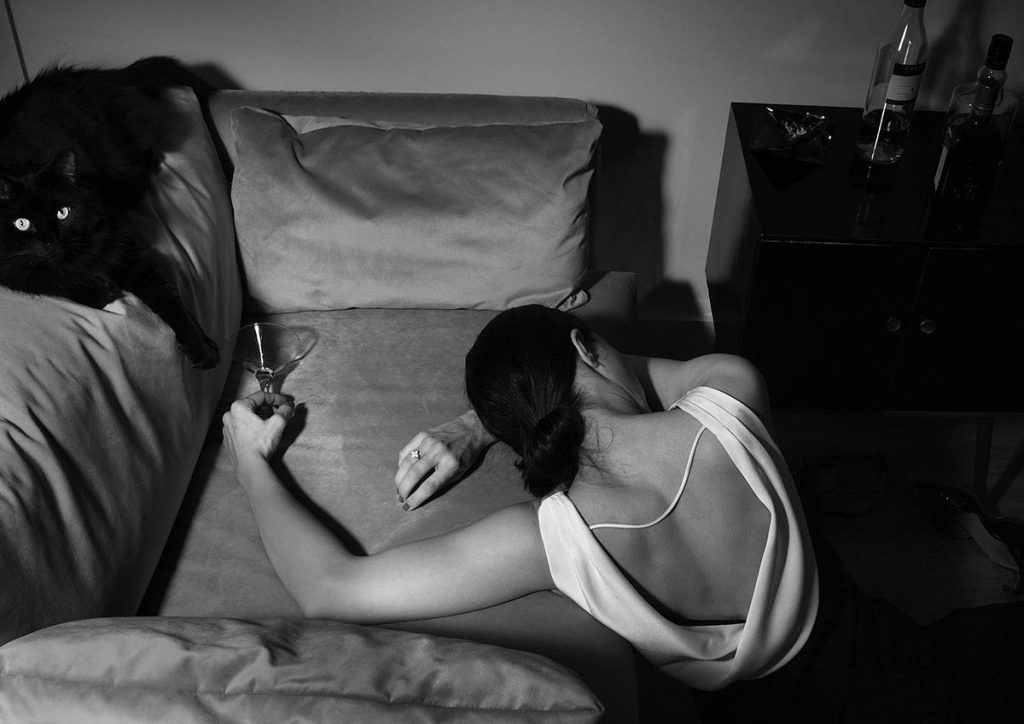
One of my earliest self-portraits, taken as part of my coursework.
There was something strangely addictive about it – I loved the combination of solitude, storytelling, performance, and symbolism. Unlike other types of photography, self-portraiture felt very personal and more meaningful than, say, landscape photography.
Once the course ended, I threw myself fully into it:
I took specialised workshops, enrolled in online courses, watched endless tutorials, studied the work of well-known self-portrait artists, and spent countless hours experimenting with ideas and techniques.
What kept me going during that time was a very clear ambition: I wanted to really master it.
Whenever I came across the work of photographers I admired, I felt an intense desire to elevate my own work to that level. I wanted my images to feel more emotional and polished, and since I was constantly learning and improving, photography felt incredibly exciting.
Also, over time, I became more confident in understanding what made an image “work.”
I developed a better eye for composition, lighting, editing, and colour. My shoots became more technically refined, and my creative process felt a bit more structured.
Doing Everything “Right”
And in many ways, I was doing everything “right.”
I had found and committed to a niche and was consistently honing my craft. Having a clear artistic direction gave me focus and purpose, especially in the beginning.
But what I didn’t realise at the time was that I was also slowly creating invisible boundaries around myself.
Without noticing it, I had started defining myself very narrowly: not just as a photographer, but specifically as a self-portrait artist…and the danger is:
Once something becomes part of your identity, it can be hard to step outside of it.
Turning Art Into Content
The second trap I fell into was turning art into content.
As my work improved and I began winning awards and exhibiting my images, I naturally wanted to share what I had learned.
Self portrait photography had become such a huge part of my life that teaching others felt exciting and meaningful.
So I started posting more consistently; I created blog posts, YouTube videos, and even an ebook around self-portrait photography.
I positioned myself as someone with expertise in this area, and I truly enjoyed helping other people develop creatively.
But somewhere along the way, something began to shift. Without realising it, I slowly stopped creating only for myself: I started thinking in terms of posting schedules, audience expectations, and output.
Instead of simply following curiosity, I became increasingly aware of what fit my existing “brand” and what people expected from me creatively.
And, unfortunately, that changed my relationship with art in ways I didn’t notice at first – away from curiosity and self-expression to productivity and the fulfilment of imaginary expectations.
Even looking back at my Instagram now, I can clearly see the shift happening over time:
Years ago, my photos felt much lighter and more spontaneous; I would post street photography, random moments, or simply a scene with beautiful lighting that caught my attention, without pressure to make everything feel polished or meaningful.
But gradually, the subjects of my posts became increasingly narrow, and eventually I shared only self-portraits because other content “wouldn’t be on brand”.
And sadly, the more defined my artistic identity became, the less excited and free I felt.
The End of the “Techniques Handbook”
Another creative trap in the journey towards creative burnout: I slowly fell into what I’d call reaching “the end of my own techniques handbook.”
For years, photography felt endlessly exciting because there was always something new to discover. I would go into shoots without fully knowing what the outcome would be, experimenting and chasing new visual ideas.
But eventually, I started feeling as though I had already tried everything I could think of: slow shutter speed, shallow depth of field, intentional camera movement, shooting through physical objects, analogue techniques, photo manipulation, elaborate editing processes, etc.
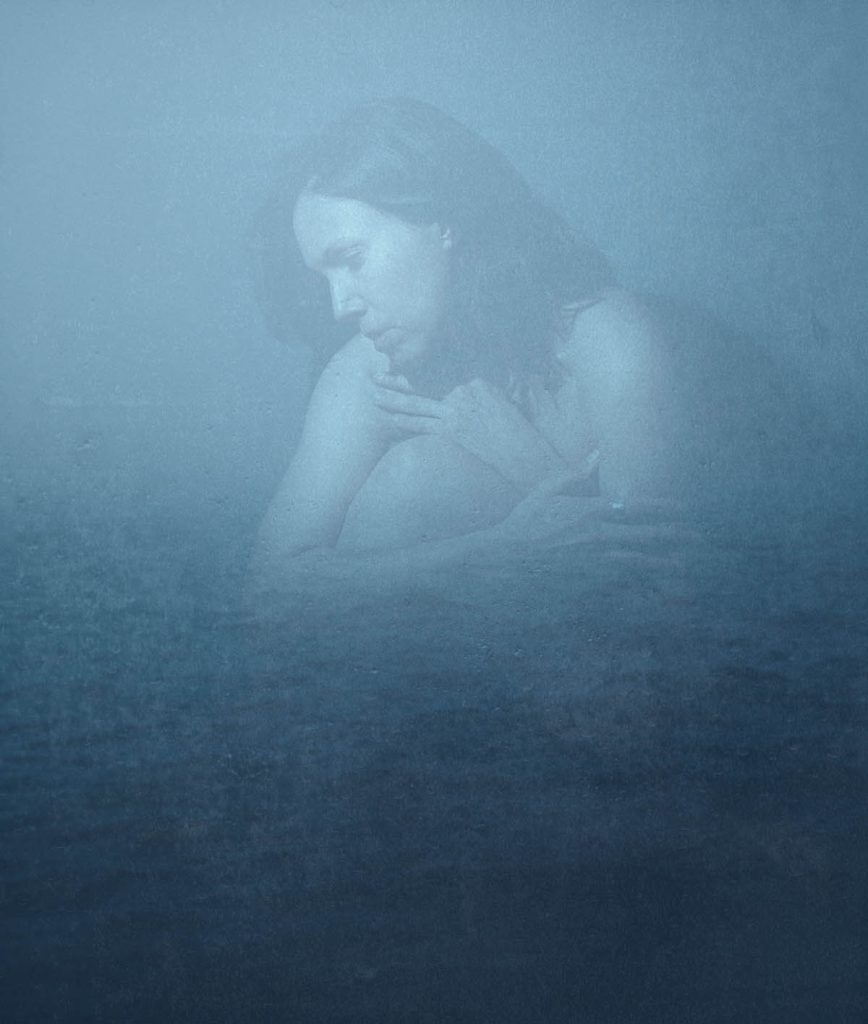
One of my more experimental self portraits using double exposure.
Of course, rationally, I know that creativity itself is endless. But at that moment, I truly felt as though I had reached the bottom of the well – like there was nothing left to pull from anymore.
And looking back, I think the problem wasn’t necessarily that I had exhausted photography itself, but that I had exhausted my own framework:
Almost all of my work still revolved around the same core idea: self-portraits, usually shot indoors, often exploring similar emotional territory.
Even though the techniques changed, the overall system stayed quite narrow. And I think that, eventually, anything becomes repetitive if you stay inside it long enough.
Part of this is probably just my personality; I tend to become obsessive about things I love, throw myself fully into learning, and move very quickly once I become passionate about something.
For a long time, that intensity felt like a strength, but eventually I think I simply went too hard and too fast for too long.
At the time, I thought the solution was always more: more projects, more techniques, more learning, more output…but what I actually needed was non-doing.
But because I never consciously slowed down, my mind eventually did it for me that day four months ago when my creative burnout phase started.
Hitting the Pause Button
For many weeks after that, I had no spark, no curiosity, no ideas, and no desire to create anything at all.
And strangely enough, the thing that finally brought some energy back was doing the simplest (and perhaps hardest) thing:
Resting.
Not forcing myself to “find inspiration”, or trying to fix my creativity, but simply focusing on other parts of life for a while, like improving my Japanese and doing DIY projects.
And gradually, without forcing it, something started changing. For the first time in months, I began feeling curious again!
What Comes After Creative Burnout?
As for the future, I know I still want to create self-portraits, but in a different way:
I want to work outdoors more, even though that makes me feel a bit uncomfortable. I also want to incorporate more textures and maybe even hand-drawn elements to create a more painterly effect.
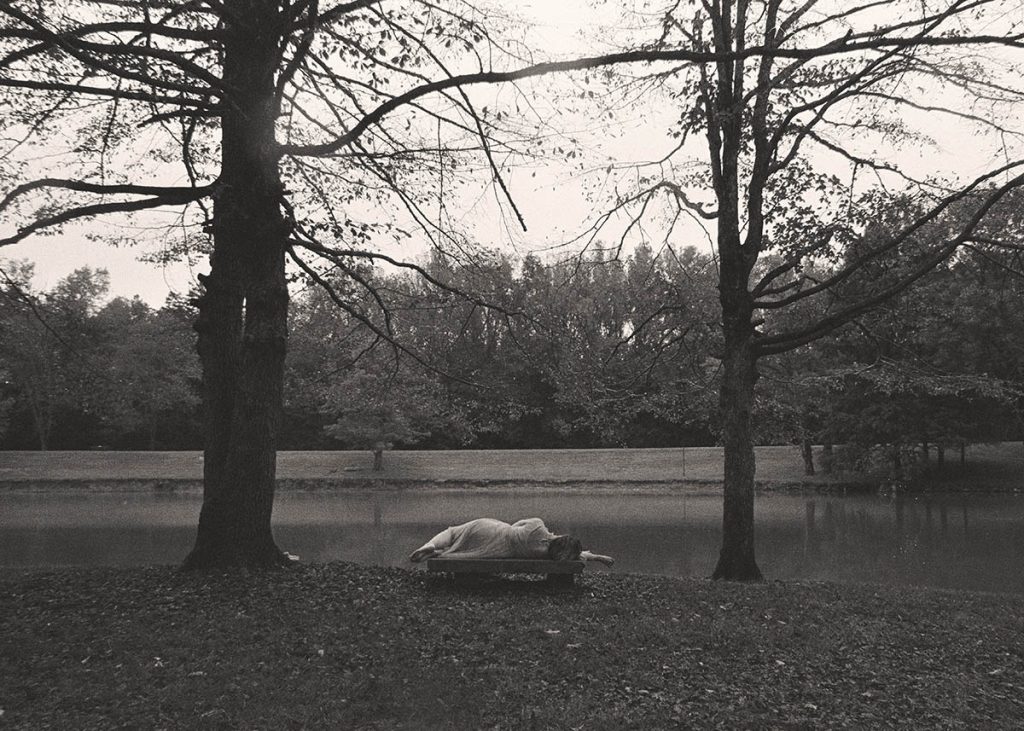
Something I want to do more of: taking self portraits outside.
And perhaps most importantly, I no longer want to force myself into one medium or one identity.
Recently, I’ve even found myself enjoying completely unrelated creative things again – like folding origami simply for the pleasure of making something with my hands.
And I think that’s ultimately what helped me understand creative burnout differently.
Sometimes the way forward is not pushing harder, finding a better workflow, or learning another technique…sometimes, creativity simply needs breathing space.
I still don’t have a perfect solution or neat conclusion, but for now, I think it’s enough to simply follow whatever feels genuinely interesting again.
And if you’re currently feeling creatively stuck too, maybe it’s worth considering that this isn’t the end of your creativity at all.
Maybe it’s simply the beginning of a different phase; one that, looking back years from now, you’ll recognise as a turning point: the moment your work started becoming richer, deeper, and more meaningful.
Post Update!
It’s four months later, and I can confirm that I’ve managed to overcome my creative burnout.
Watch my YouTube video below for 5 tips that helped me find my creative spark again:
Dear Desiree,
Thank you very much for your interesting message. I like very much your work. Congratulations
Andy
Hello Andy, thank you so much for commenting and for reading the post! I really appreciate it!
Thank you very much for sharing your journey with us. I appreciate your courage, honesty and insights and find inspiration through you.
Wow thank you so much!! That means a lot. Thank you for taking the time to comment!
couragious decision!!
Hit the new road and enjoy it …….!
Bert
Hello Bert! Thank you so much for your lovely comment 🙂
Estimada Desiree.
Muchas gracias por compartir tu experiencia. Disfruta tu nuevo camino.
Pili
Muchas gracias!! 🙂